
A project defined by subtraction and precision: expansive views over the city, spatial continuity,
and surfaces designed to remain “alive” over time. In the Milanese duplex penthouse designed by
architect Hannes Peer and featured by ELLE DECOR Italia, material is never a simple
cladding: it is an integral part of the architectural narrative.
An international interior, far from clichés
The home is conceived as a luminous continuum: thresholds, passages and spatial screens guide the eye toward the skyline and the rooftop, balancing modernism and everyday living. In such a context, every material choice must meet a dual requirement: to be visually striking in natural light and, at the same time, reliable for daily use.
For this reason, beyond iconic pieces and “noble” materials, the project is shaped above all by what is touched and traversed: surfaces, textures, finishes and micro-variations that make the space credible and welcoming, without weighing it down.
The role of Fornace Bernasconi: bespoke terracotta and brick surfaces
As an artisan partner, Fornace Bernasconi supported the studio in defining bespoke terracotta/brick elements and surfaces, working according to the principle that guides every intervention: terracotta must be architectural material, not decoration.
In contemporary projects, the value of handmade terracotta lies in its ability to introduce warmth
without visual noise.
It is a measured presence that gives depth and rhythm to surfaces—exactly what is needed when space
is conceived as a continuous system of light, proportions and perspectives.
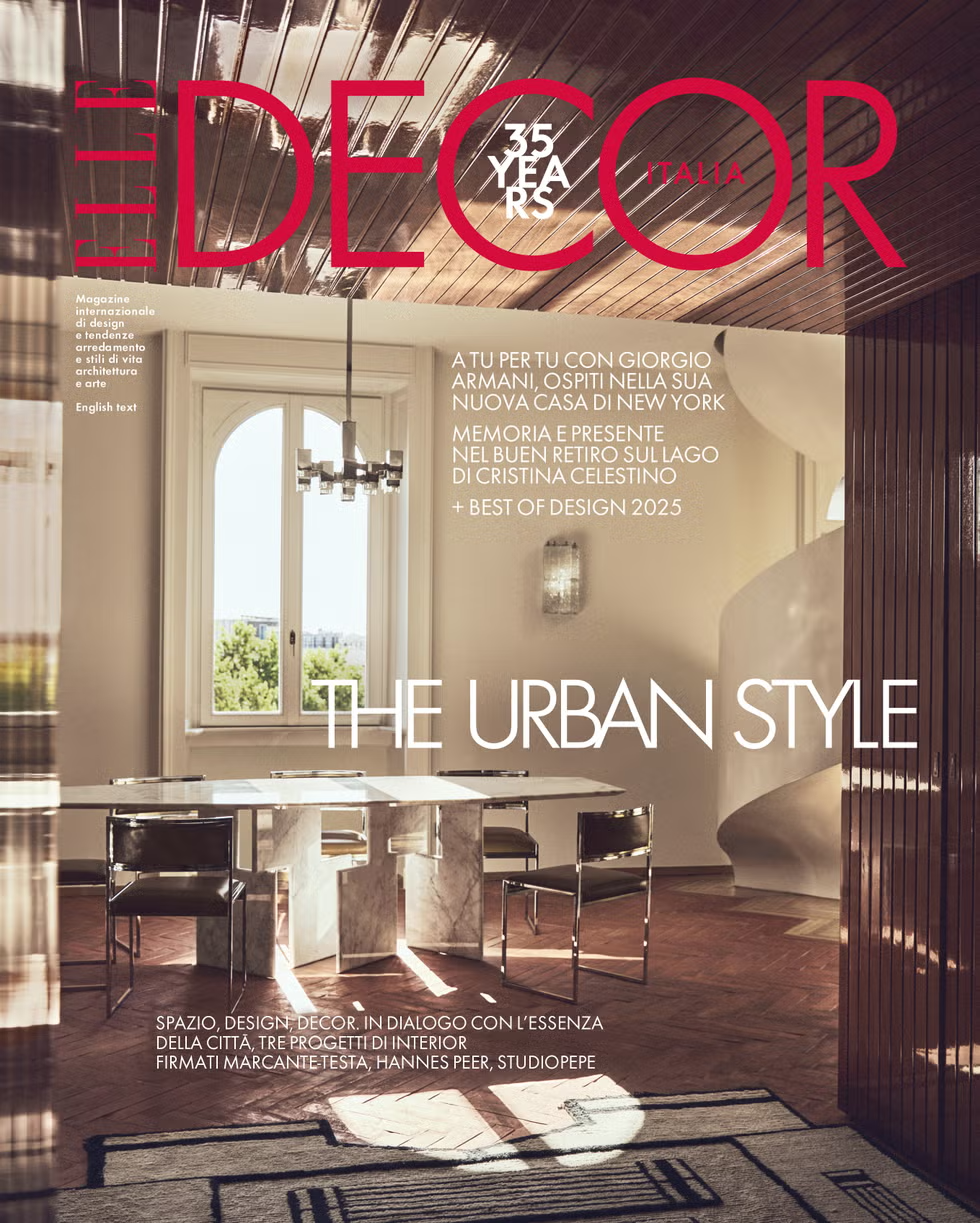
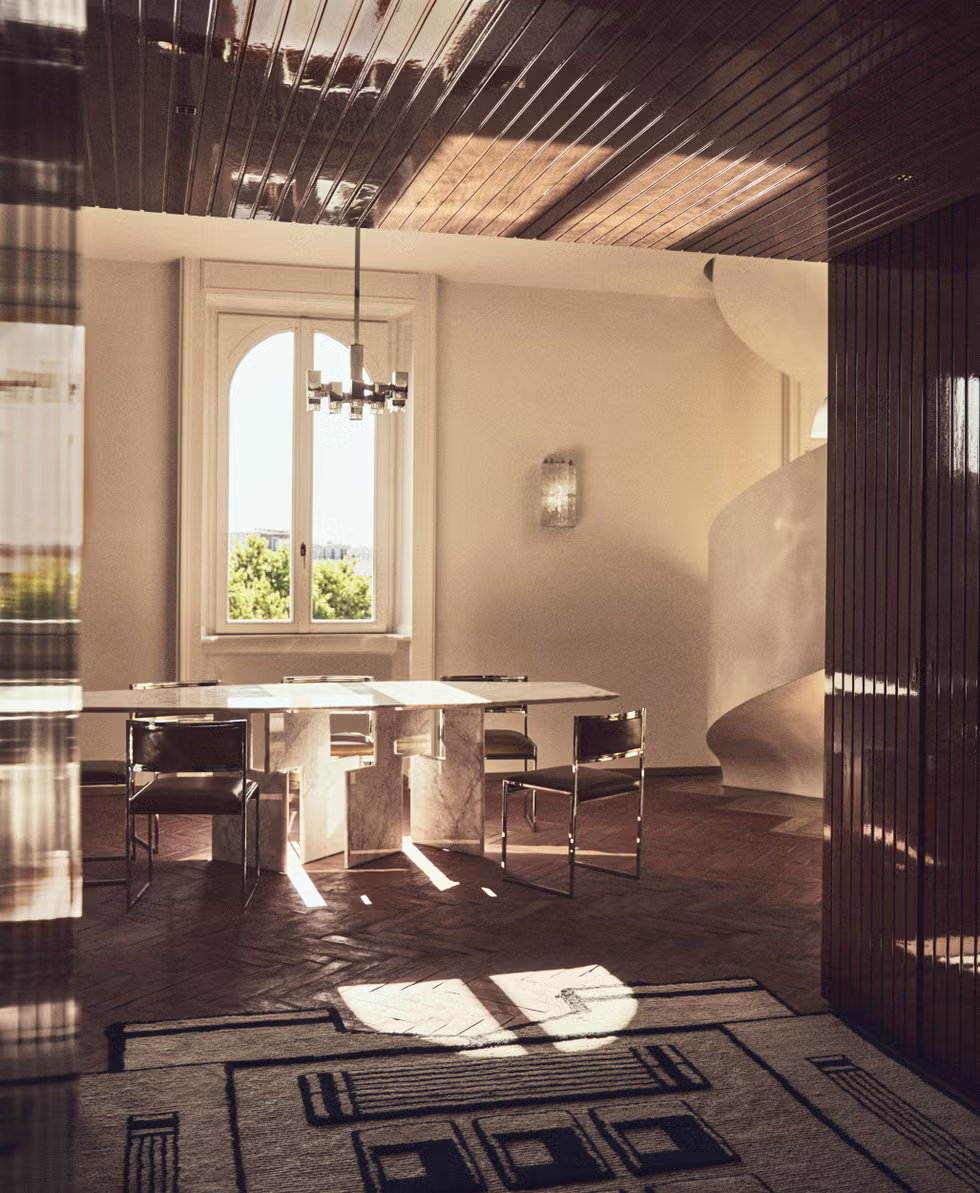
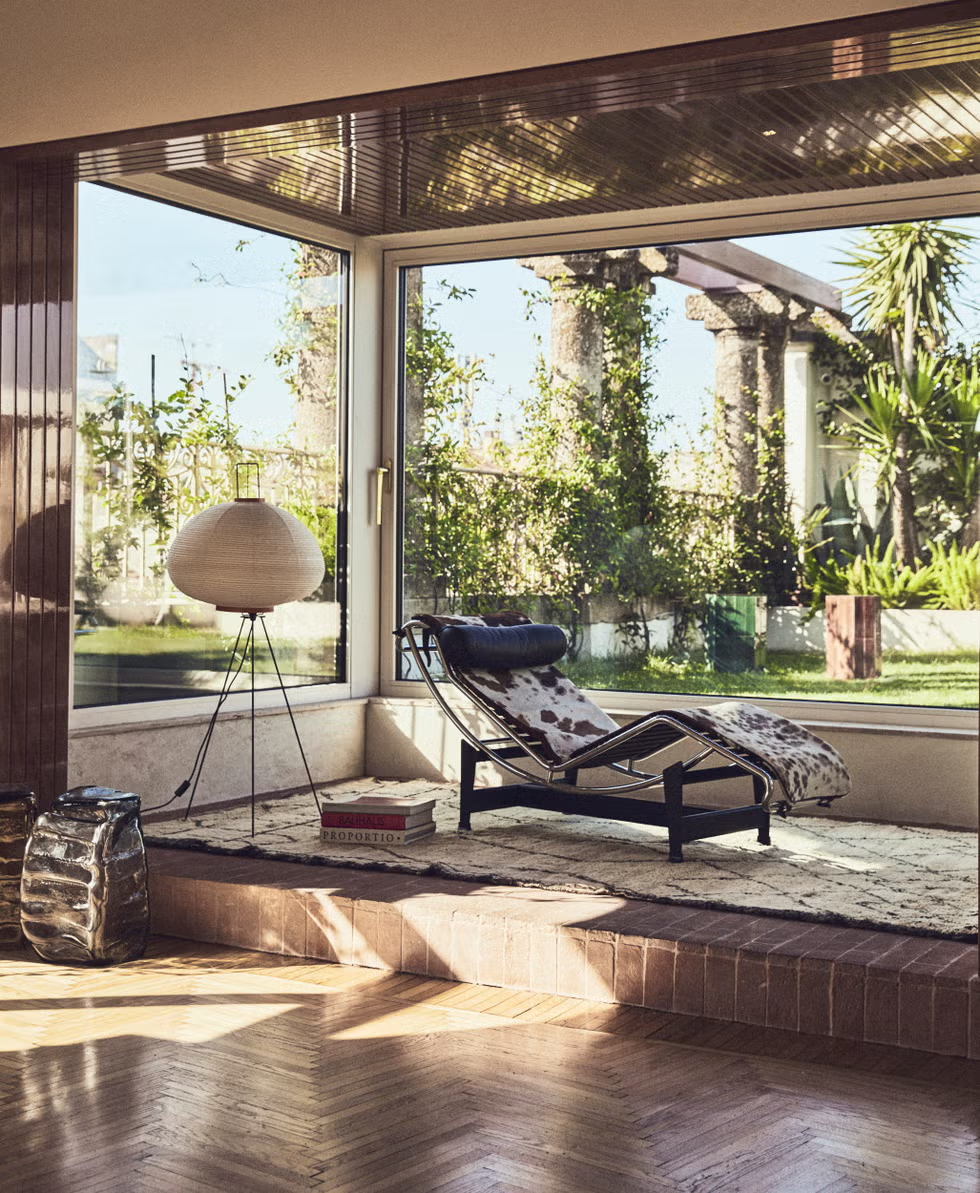
Why terracotta works in a light-filled penthouse
In an interior high above the city, light changes constantly: morning light, backlighting, evening reflections. Overly uniform surfaces tend to appear “flat,” while overly expressive ones risk dominating the scene. Handcrafted terracotta, instead, offers a rare balance: it absorbs and reflects light through subtle, natural, never repetitive variations.
- Depth without artificial effects: texture works with light, not against it.
- Material warmth compatible with significant stone, wood and glass elements.
- Time as a value: the surface stabilizes, matures, and gains character.
From sample to site: what “bespoke” really means
When speaking about artisanal processes, “bespoke” is not a generic term. It means fine-tuning the final result through samples and on-site verification, working on:
- tone and color in relation to the actual light conditions of the space;
- finish (softer or more defined) based on perception and use;
- tolerances and laying rhythm to achieve continuity without losing naturalness;
- integration with other materials (stone, metal, wood, glass) for a coherent balance.
The expected result is not to “draw attention to the terracotta,” but to ensure that the whole works: a home that remains elegant when perfectly ordered and convincing even when lived in.
Materials and maintenance: everyday performance without losing authenticity
In a high-end residential project, durability is achieved through a precise dialogue between
material, installation and protection.
When correctly treated according to its intended use, terracotta maintains its material identity
and performance over time, significantly reducing sensitivity to stains and absorption.
It is a technical issue, but a decisive one: the beauty of a surface is not only in the day of the photo shoot, but in its ability to remain consistent over the years.
Credits
Cover story: ELLE DECOR Italia
Architecture: Hannes Peer
Photography: Stefano Galuzzi
Styling: Tamara Bianchini